More power through heat storage in a closed water circuit

The new hot-water storage tank reliably provides water at a consistent temperature for water-intensive production processes, utilising solar power to use energy in a targeted and efficient manner.

Energy is required in many different forms in manufacturing plants, including in our furniture production here in Rüti. The conscious and efficient use of these resources is a central component of modern corporate management and makes a significant contribution to securing Switzerland’s long-term competitiveness as a business location. At the same time, it makes an important contribution to reducing emissions and to the responsible use of natural resources.

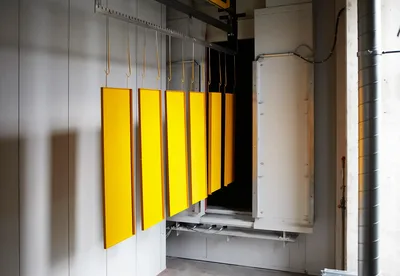
Powder coating

This is where parts are finished with paint

The powder coating plant is one of the most resource-intensive facilities in the factory. This is where metal parts are painted and our furniture is finished with colour. In addition to electricity, water is required in particular for various stages of the process: before a metal part can be powder-coated, it must be absolutely clean and free of grease.

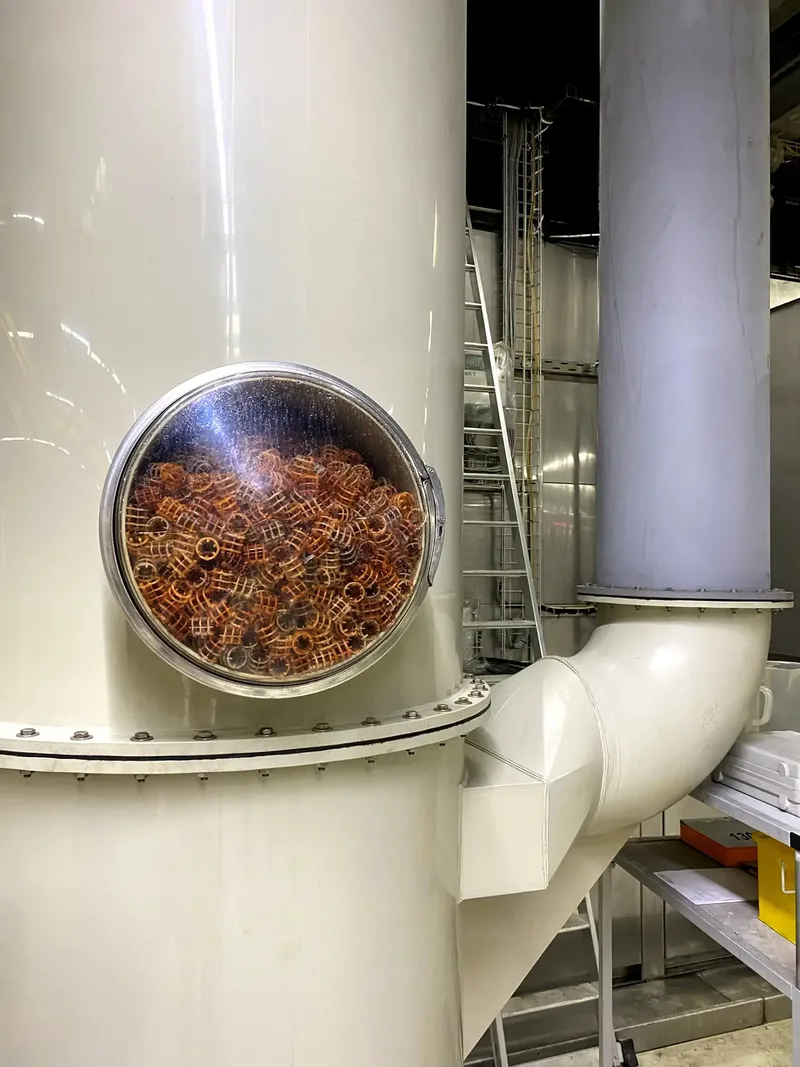
Workpieces first pass through a washing line to clean their surfaces

The washing line consists of five pre-treatment stages
The cleaning and recycling of the process water results in low water consumption
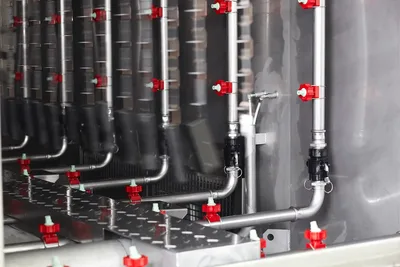
Nozzles inside the washing line

For over 120 years, Embru has combined tradition and innovation – and today is fully committed to sustainability, fairness and responsible business practices.

First, coarse dirt is removed by a pre-wash. This is followed by degreasing using alkaline or neutral cleaners, usually with warm water. Residues are rinsed out in several rinse baths. Finally, a final rinse is carried out using demineralised or fully desalinated water.

Reuse of process water in a closed-loop system

Before the hot water storage tank was installed, this process water had to be reheated several times a day during each shift. This led to short-term peak loads and correspondingly high electricity costs. Thanks to the new solution, which features a huge tank with a capacity of 15,000 litres, the water is kept at a constant, optimal temperature range of 60–80 degrees Celsius. It is heated and stored overnight and during hours of strong sunshine using surplus solar power. In this way, we specifically reduce the load on the grid, lower expensive peak electricity consumption and achieve measurable cost savings. The process water is continuously recycled, meaning that very little additional fresh water is required.

Storing energy in the form of hot water

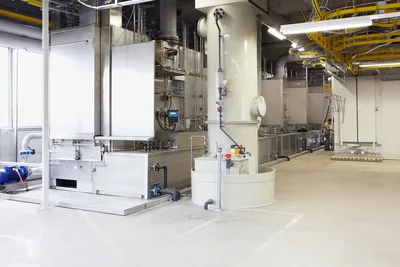
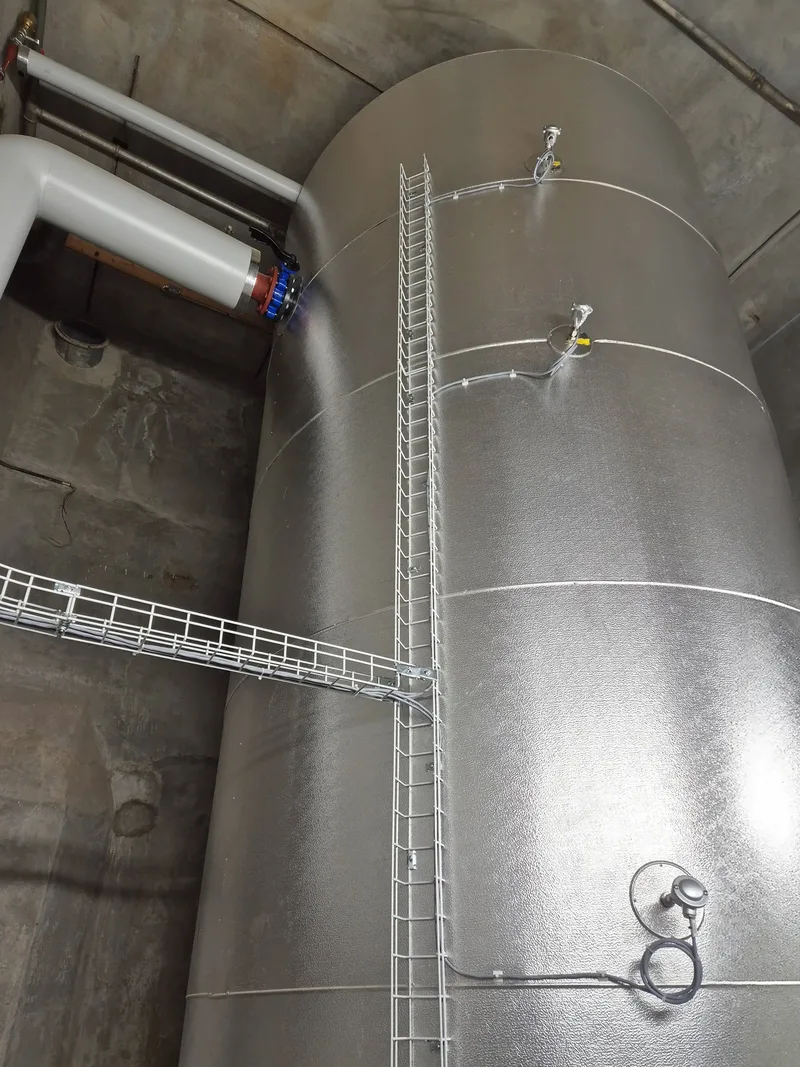
The huge tank keeps 15,000 litres of water constantly warm
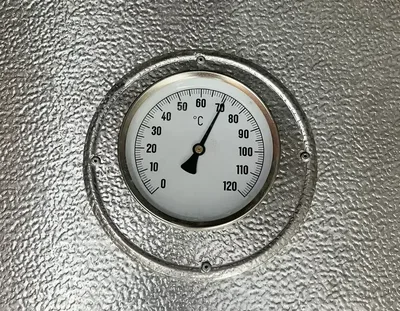
Behind a thick layer of insulation, the water remains at a temperature of between 60 and 80 degrees

Making efficient use of solar power

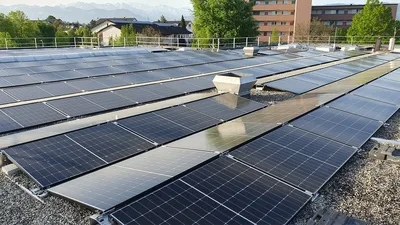
A proportion of the electricity used for heating comes from our in-house photovoltaic system: since May 2024, we have expanded our capacity to a total of 255 kWp with an additional 146 kWp system. This enables us to meet around 10 % of our electricity requirements in Rüti ourselves. The PV electricity is primarily used directly on site – during the week for production, and at the weekend, for example, for the generation of nitrogen, which we use in the Punching and Laser Centre and in our tube laser facility.

Photovoltaic system on the bedding shop

A step towards the bigger picture

Such technical optimisations form part of the wider context of our company-wide sustainability strategy. Embru has been certified to ISO 14001 since 2013 – the internationally recognised standard for effective environmental management systems. Among other things, this standard requires products and services to be considered throughout their entire life cycle and forms the basis for circular solutions.

Furthermore, Embru has been working with the Energy Agency for Industry (EnAW) since 2019. EnAW regularly confirms that we have measurably reduced our CO₂ emissions and energy consumption – fully in line with the principle of economic climate protection, as jointly promoted by the federal government, the cantons and business partners. Our sustainability strategy is firmly embedded in our business strategy and mission statement. It is continuously reviewed and further developed through clear targets, key performance indicators and external audits. We are committed to the goals of the Paris Agreement on climate change and the UN Sustainable Development Goals (SDGs) – and take action where we, as an industrial company, can make a direct contribution.

Contact + downloads